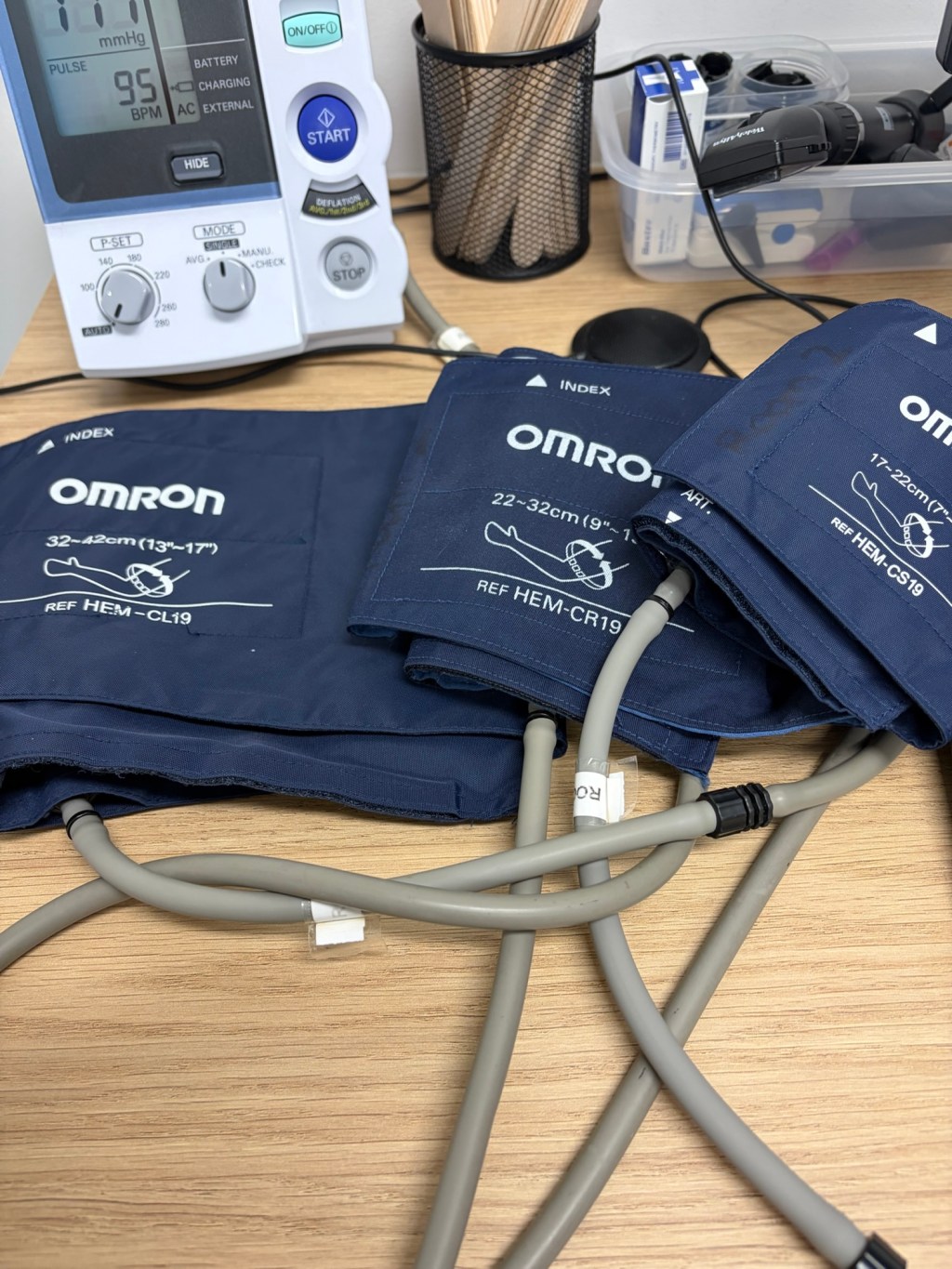
Blood pressure is a fairly common measurement taken in general practice and in health generally.
None of that works too well, however, if you can’t easily get the measurement.
And so what becomes a routine, straightforward process can become a point of stress, anxiety and shame for the patient in front of us.
That really stuffs with rapport. And all we’re trying to do is take a blood pressure.
So . What can we do to manage this?
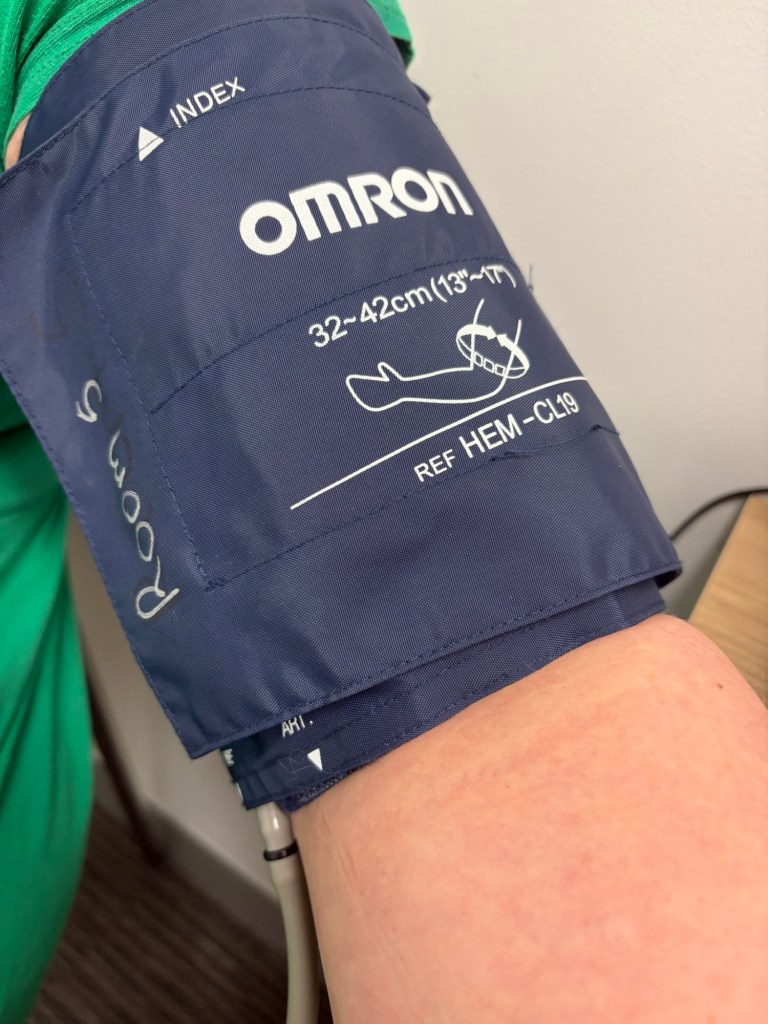
Why do we measure blood pressure?
Primarily in general practice we check blood pressure as a form of opportunistic screening.
- Hypertension is a common modifiable risk factor for cardiovascular disease and management of this reduces morbidity and mortality from stroke, acute myocardial infarction, heart failure, kidney disease and sudden death
- Hypertension is very common, and many Australians have untreated hypertension (1)
Blood pressure is also important to measure in monitoring of medications. Examples include but aren’t limited to:
- anti hypertensive medications
- Stimulants
- Diuretics
- Some antibiotics
- Some Immunosuppressants
- Some anti flammatories
- Some hormone therapy
- And so on…
When patients are unwell, blood pressure is an important marker of how sick someone is in a component of other measurements.
In my specific context because I am a Gp Obstetrician I also frequently check BP in pregnant people as surveillance for gestational hypertension and preeclampsia – both of which can be quite dangerous for a patient.
So.. how accurate does it need to be?
This is an important question – and one that as a doctor might create a little bit of discomfort for you.
Sit with it please, and bear with me.
And before you become too unhappy about the concept of “accuracy” of blood pressure measurement. In 2024 the ARMS crossover RCT (2) found the position of someone’s arm with an upper arm cuff measurement can change the accuracy of a blood pressure measurement by between 6-10mmHg. The authors conclusion was that accuracy of positioning was very important (supported vs unsupported, angle of bend to the elbow etc) my takeaway was that general practice, and human beings don’t always allow for this. It’s by way of pointing out that our standard training of checking a blood pressure with an upper arm measurement – may not be as accurate as you have assumed.
White coat hypertension is estimated to occur in anywhere from 10 – 50% (!!!) of the population (3), and importantly – in about 20% of patients newly diagnosed with hypertension when ambulatory 24 hour blood pressure monitoring is undertaken. (4) Confirming again – that the blood pressure readings you think are always accurate? Maybe not so much.
So again, think. How accurate does your measurement need to be?
A high reading, consistent over multiple appointments – that patient requires ambulant 24 hour blood pressure monitoring to confirm those readings. If you’re in a resource environment where that’s not available, or the cost is out of reach, ask the patient to check blood pressures intermittently at home. (My usual practice is to ask them to take it at different times of day a couple of times a week, and write down the numbers over 4-6 weeks, you might have a different arrangement, keen to see – GPs are nothing if not resourceful).
Sick patient and the blood pressure doesn’t match the clinical presentation? Look at the other measurements – heart rate, sats, and take in the gestalt. How does the patient look?
Pregnant patient and suspicious about preeclampsia? Lie her down and recheck . Recheck manually. Or send the patient in to see their birthing provider to recheck over a period of time, with more clinical information such as bloods and a urine PCR.
In ICU or anaesthetics and really need a number.. well idk? I’m just a gp? But can’t you put in an ART line?
There are options. Think laterally.
Size matters (for blood pressure cuffs).
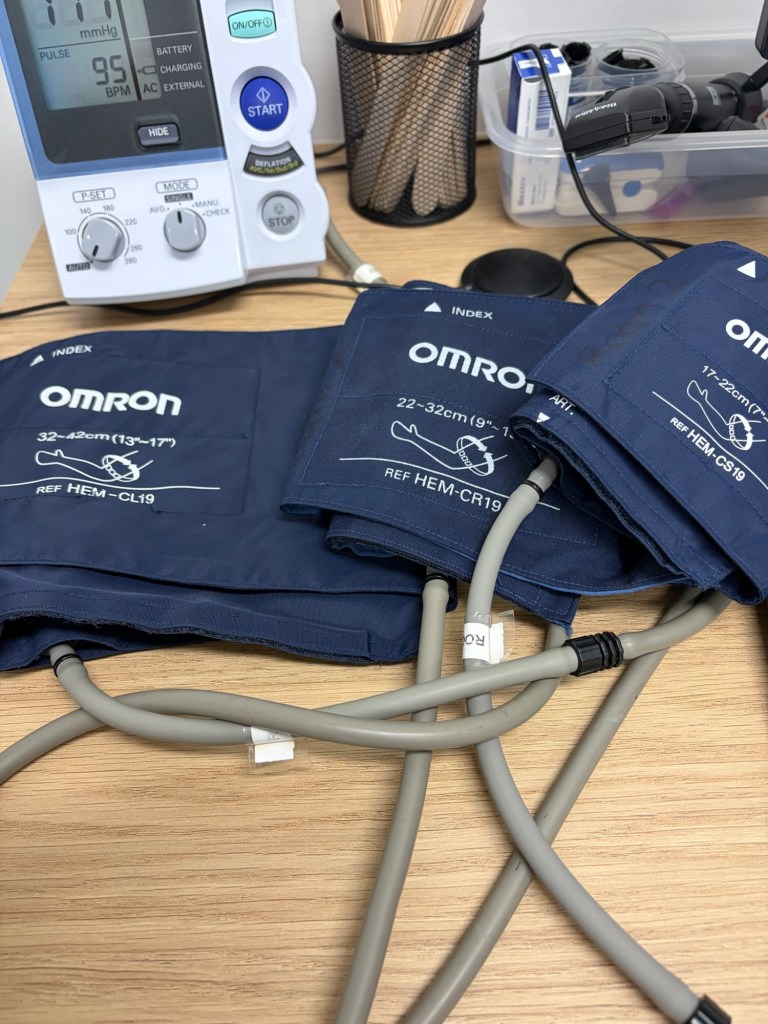
Blood pressure cuffs come in multiple different sizes.
A cuff that is too small will squeeze too hard and will inflate someone’s blood pressure. Conversely a cuff that is too large will compress too little and may underestimate. This is anecdotal but I find generally in practice a smaller cuff is more of a problem than a larger one. This may however be reflective of my patient population.
The cuff (Sz) randomised crossover trial in 2024 found the mean systolic BP difference with the wrong sized cuff was between 4.8 and 19.5mmhg. (And that’s the mean!!) (5)
Sizing the cuff to the patients arm is therefore important. Doing this before taking the patients blood pressure for the first time, and potentially sending it up further by hurting them with too small a cuff is important.
Ask your clinic to invest in multiple different sizes of blood pressure cuffs, or invest in them yourself.
For very large arms sometimes cuffs designated for legs may be required – which unfortunately are often simply not available in general practice.
The other issue I’ve frequently found is some clinics only purchase a small number of larger sized cuffs and then these go walkabout. Sometimes it needs a fair bit of advocacy with owners, and I appreciate as a tenant GP, or a registrar, sometimes this can be a difficult conversation.
Check on their forearm
This is my favourite trick when I haven’t got a manual sphyg or the right size BP cuffs which in some jobs was pretty much all the time. Generally you can fit a regular BP cuff or a large BP cuff on forearm easily even if you don’t have access to one that fits the upper arm.
Evidence shows forearm blood pressure methods will be slightly higher. This is in the order of an elevated mean systolic BP between 2.2mmhg and 4mmhg (6), (7) or equivalent, depending on the study (8). For safeties sake given the jury is still out, I assume this will be slightly elevated and interpret accordingly.
Again as we’ve discussed above – in most cases I’m screening. This gives me enough information to know if I need to look further, take one of the steps mentioned above, or just file the information away and see if there’s a trend over time. Obviously in a scenario where I need this to be accurate (eg pregnant patients) – this is not the best option, but it is a better option than continuing to try with too small a cuff which will also not only return too high a reading, but hurt the patient in the process.
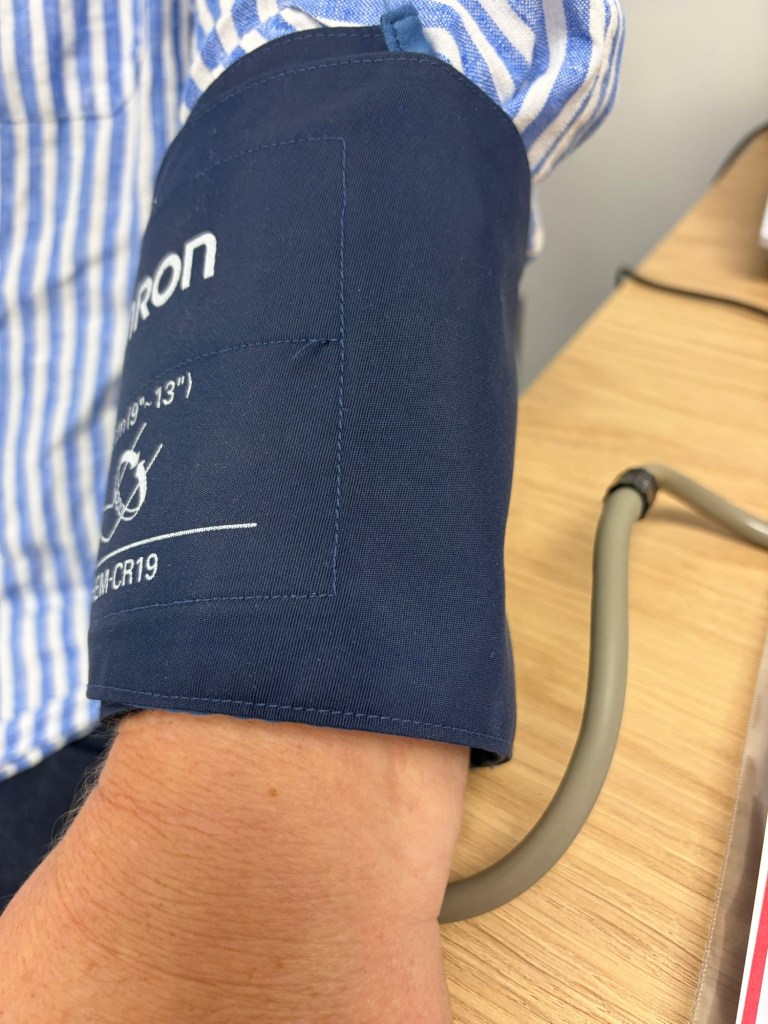
What about manual blood pressure?
This is always an option and your clinic should have a manual sphygmomanometer (try saying that three times fast ) as it’s a requirement for accreditation.
However did you know that manual blood pressures when studied routinely overestimate BP by 10-15mm Hg? (9) .
Our ears aren’t as good as we think they are. Again, something to be mindful of when we consider “accuracy” in our measurements.
I’m a gp this is longer than two pages and I’ve lost interest. What’s the executive summary?
Remember your goals of care, why you are measuring the number and why it is important
The (mostly hidden) curriculum on blood pressure measurement and accuracy is not as concrete as you think
Size does matter when it comes to blood pressure cuffs
A forearm measurement is an option.
Larger bodied people deserve healthcare just like anyone else. Don’t let the arm stress you out! Be creative.
I’m a patient and I read this cause I was interested – what’s my takeaway?
You deserve health care, and preventative health care just like everyone else.
Don’t be afraid to ask the provider if they have the correct cuff size when they’re checking your blood pressure.
Don’t be afraid to ask if they can take a manual blood pressure or if a forearm measurement is possible.
Don’t be afraid to point out if a forearm measurement or a small cuff size is used that if the BP is elevated – it’s a measurement issue not an issue because you’re in a bigger body. (You have my permission to mentally hulk smash them – please don’t actually do it though).
If multiple attempts are being made to take your BP and you are uncomfortable – don’t be afraid to ask why the measurement is needed and what the alternatives are.
Here endeth my lesson team. Please don’t take my FRACGP cause I have challenged a very dogmatic belief.
(1) Australian guidelines for diagnosis and management of hypertension in adults
(2) ARMS RCT
(5) The Cuff(SZ) Randomized Crossover Trial
(7)the comparison of upper arm and forearm blood pressure
(9). Fully automated blood pressure is the way to go in the office,


Leave a Reply