I really didn’t want to weigh into this because of all the vitriol floating around online but here we are.
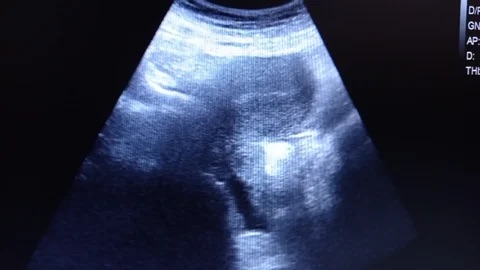
A certain podcast host who is also a bestselling author has recently hosted a doctor who has suggested that “every woman” post menopause should have a transvaginal ultrasound to screen for endometrial and ovarian cancer.
This is bad advice.
First:
I need people to understand just how much at the moment the phrase , “there isn’t a lot of research into women’s health” has been co-opted by wellness influencers, many of whom are also doctors/nurses and health practitioners trying to sell you something.
Yes it is indefensible that trials did not include women. Yes it is indefensible that many studies have not been done. This does not mean that there aren’t many hard working researchers out there doing research now, that we have zero data completely and it also does not mean that we should be completely ignoring existing data based on hunches or vibes.
What about ovarian cancer? :
Screening is a really difficult beast, particularly on a population level, and it’s a really hard one even for doctors to get their heads around.
You can read a little more about the principals of screening here. In essence, a screening test is performed on someone who doesn’t have symptoms to check for the presence of early stages of a disease, usually prior to the disease become established.
The cervical cancer screening program is a really good example of this – we screen for precancerous lesions, and the presence of a HPV infection. So we can remove precancerous cells from the cervix, usually by removing part of the cervix, or even the whole of the uterus before this becomes cervical cancer.
One of the difficulties with learning about screening as a doctor (and I suspect as a patient) is you really want to help people so you assume more screening is better. But this is one of the things we did learn with the cervical screening program, and the reason we no longer enrol people under 25. For many years women had screening from 18, because HPV infections most commonly occur between 16-25, lots of women had pre cancerous changes, and were treated. Because of treatment to their cervix this meant an increased number of women had fertility issues and premature births – due to intervention. We now know because Australia has some of the best data in the world around our screening program, that the cervical cancer rate in the under 25s has never changed. So that screening didn’t help – and caused harm. Even though we all really thought we were helping. (Something I really struggle with to this day, because there are women I have absolutely harmed, thinking I was doing right by them :().
When it comes to ovarian cancer – we know very clearly that ultrasound is not a good screening test in asymptomatic people . It doesn’t improve detection rates. And it causes an increased risk of harm.
This is for a couple of reasons.
Firstly because cysts are actually pretty common in women. At the moment (although this is improving). The only way to determine if a cyst is a problem or not is to take a woman to surgery and cut it out. This isn’t a benign procedure, and you have to cut out a lot of cysts to find one cancer.
Secondly, because ovarian cancer as far as we know isn’t like cervical cancer. There isn’t a precancerous period. It’s either cancer or it isn’t. Yes there’s an argument that early detection is more likely to save your life, but again we get back to problem one – namely, how many people do we have to put through surgery to find one cancer? An awful lot.
You’re probably going to tell me we need a better early detection test for ovarian cancer. I completely agree.
The ovarian cancer research fund is raising money for it. Hopefully they find one.
Annual ultrasound isn’t even recommended for people with known genetic susceptibility eg, BRCA1 or 2. What we do for those patients is we send them to surgery and we get rid of their tubes and ovaries as soon as they are 40 or they’ve finished their family.
I’m sorry I really wish I had something. Trust me – I have ovaries too.
What about endometrial cancer?
In terms of endometrial cancer again, the evidence does not show regular ultrasound scanning improves detection rates. This is again because incidental findings cause harm to patients and outweigh chances of picking things up.
Endometrial cancer is more common in certain groups – PMOS comes to mind, and having a chat with a provider about your risk factors is always really important.
What about me??
Now I need to make it really clear – screening is done at a population level. Screening is nuanced. You and I always need to have a chat about your individual risk and what works for you. And that’s going to be different for the next person and the next person and the next person.
Screening is also different to diagnosis.
If you have any kind of symptoms (any kind of bleeding post menopause – I have discussed this before) we are doing a scan asap. The equation on the value of a scan changes!
Ovarian cancer is a really tricky one, but if you’re not feeling quite right, vaginal bleeding, bloating, bowel changes, weight changes. Let me know . Again the value of a scan changes.
Anyway. Don’t be mad at me. So many mad people online this week. I’m not gate keeping, gas lighting and I don’t hate women.
It’s just, medicine isn’t always straightforward. Sadly.
Good information sources on women’s health
Jean hailes for women’s health


Leave a Reply